

Description
Course type: Online; Self-Paced
Specialty: Specialty: Cardiology
Language: English, Portuguese
Resources: Debriefing Videos
Level: Intermediate / Advanced
Target: General Practitioner and Hospital Care Physicians
Modules: 8
Durations: 2 months
Time Effort: Up to 110 minutes per module
Certificate: Yes
Course Description
Valve heart disease represents a common but difficult problem in daily clinical practice. It can be classified as congenital or acquired, primary or secondary. Physical examination is essential and represents the first stage in the assessment of valvular disease.
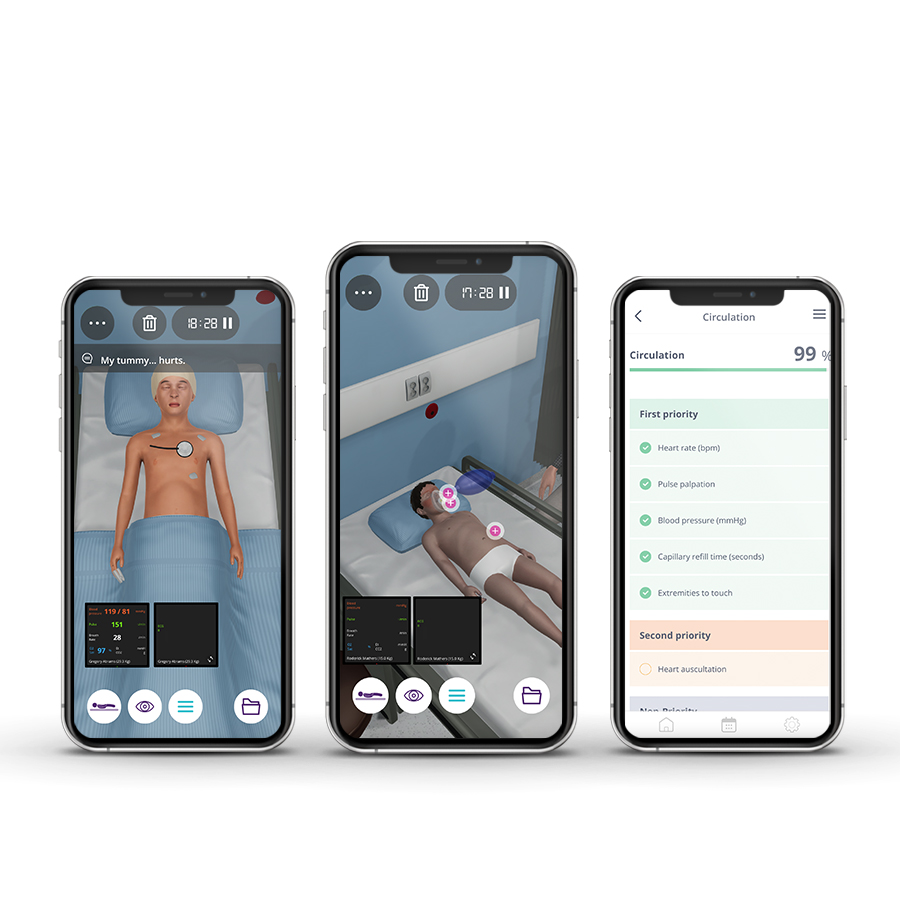
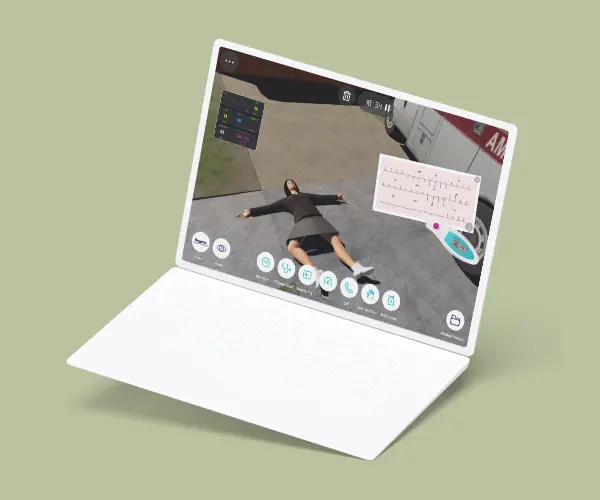
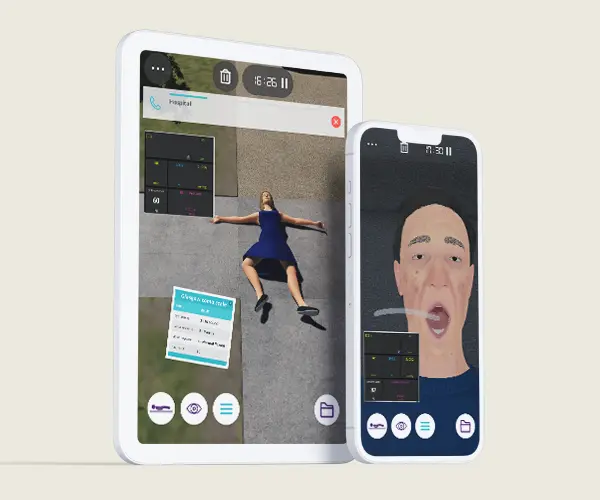
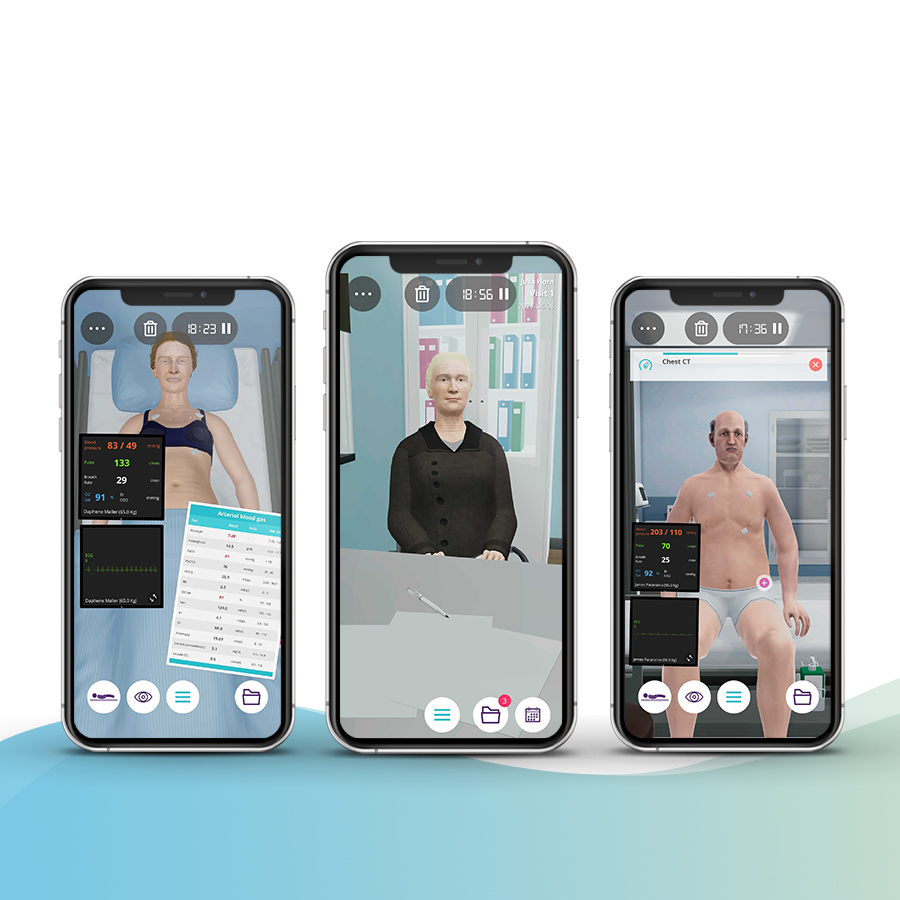
The SIMValve (Medical Simulation in Valve Heart Disease) course allows professionals to develop their skills in implementing medical diagnoses, clinical measures, and therapies based on the most up-to-date scientific evidence available. Through medical simulation with virtual patients, this course focuses on the decision-making process in valve heart disease, accurate diagnosis, and the selection of the most appropriate tests and treatments in the ER and hospital setting.
Course Overview
- 8 Modules
• 8 virtual patient cases of an intermediate level of complexity - Average Time to practice (per module):
• Clinical Scenario: 20 minutes per attempt (3 attempts: 60 minutes)
• Final attempt (if applicable): 20 minutes
• Multiple Choice Question: 5 minutes
• Feedback Area: 10 minutes
• Learning Objectives and Scientific References: 10 minutes
• Debriefing Video: 10 minutes - Online, Self-paced
• You have up to 2 months to complete the 10 modules at your own pace. The course can be accessed through Body Interact at any time. - Certificate of Completion
• After completing the course, you will receive a Certificate of Completion that can be added to your CV or Resume.
Learning Objectives
• Diagnose and risk-stratify acute chronic heart failure
• Distinguish between heart failure with preserved and reduced ejection fraction
• Optimize medical treatment for all heart failure patients
Clinical Competencies
Safety
• Collect patients clinical information
• Detect heart murmurs
Airway and Breathing
• Basic airway management
• Lung examination (percuss, fremitus, auscultation and qualities of air sound, lobar locations)
• Oximetry interpretation
• Respiratory rate and rhythm assessment and interpretation
• Thorax examination (shape, movement, diameter, ribs and diaphragm)
Circulation
• Assess and interpret blood pressure (various sites and body positions)
• Assess and interpret pulse (rate, rhythm and volume)
• Detect heart murmurs
• Identify S1 heart sounds (tricuspid, mitral)
• Identify S2 heart sounds (pulmonary, aortic)
Disability
• Blood sugar measurement and interpretation
• Mental status examination
Exposure
• Abdominal plain x-ray interpretation
• Arterial blood gas interpretation
• Assess and interpret temperature
• Assess height and weight
• Cardiac enzyme interpretation
• Chest x-ray interpretation
• Consultation management
• Electrocardiogram interpretation
• Fluid/Electrolyte test interpretation
• Hand and foot examination
• Hematocrit interpretation
• Lipid test interpretation
• Liver function test interpretation
• Nuclear imaging techniques interpretation
• Nutrition management
• Refer to healthcare/ medical specialties
• Ultrasonography interpretation
• Urinalysis interpretation
• Utilize medical records
• Write prescriptions (including controlled drug)
• Renal function test interpretation
Module 1 – Valve makeover
Context: Transcatheter aortic valve implantation (TAVI) or replacement is critical for intermediate-risk patients with severe aortic stenosis (AS). Current trials are evaluating the safety and feasibility of this technique in lower risk symptomatic patients and even patients who are asymptomatic or with moderate AS and heart failure.
Virtual Scenario: Mr. Stephenson has felt unwell recently. His condition has already interfered substantially with some of his daily tasks and quality of life. Consequently, he sought consultation with his doctor.
Module 2 – Out with the old In in the new
Context: Aortic stenosis (AS) is a common condition in which, if left untreated, AS will lead to heart failure. Without an aortic valve replacement, 50% of AS patients will not survive more than two years after the onset of symptoms. SAVR is the primary surgical treatment for aortic valve stenosis.
Virtual Scenario: Ms. Jeong has been feeling poorly lately. She even lost the will to go out, except for a few occasional outings in her house’s garden.
Module 3 – Something is missing…
Context: Bicuspid aortic valve is a congenital disease that may progress to significant valve stenosis or regurgitation that may require surgical treatment.
Virtual Scenario: Mr. Tobias has been healthy for most of his life. As a result, he mostly stayed away from hospitals and clinics. However, recently he has complained of palpitations and thinks they might have to do with anxiety.
Module 4 – When three is to many but not enough
Context: Mitral regurgitation is a chronic condition that, if poorly treated, may lead to heart failure. If eligible, most patients benefit from mitral valve repair or replacement.
Virtual Scenario: Ms. Matos has been experiencing fatigue for some time. However, in the past month, her condition has deteriorated.
Module 5 – Fever + Murmur =?
Context: Infective endocarditis is a severe valve disease in which infection develops in a native valve or prosthesis. Patients usually present with fever and de novo heart murmur. If not early diagnosed this medical condition may lead to septic shock and the patient death.
Virtual Scenario: Ms. Matos was brought to the emergency unit by her family after they found her fallen with slurred speech. She was being followed by cardiology outpatient visits.
Module 6 – Fast and furious 1
Context: Infective endocarditis is a severe valve disease in which infection develops in a native valve or prosthesis. Patients usually present with fever and a de novo heart murmur. If not early diagnosed this medical condition may lead to septic shock and the patient death. After initial diagnosis and stabilization, most of these patients will require a lengthy hospital stay and continuous monitoring.
Virtual Scenario: Ms. Matos is hospitalized with infective endocarditis.
Module 7 – Help, I’m drowning!
Context: Acute mitral regurgitation is a severe condition that, if poorly treated, may lead to acute heart failure. Without a mitral valve replacement, most patients will not survive. Emergent surgery is the main treatment for acute mitral regurgitation.
Virtual Scenario: Became suddenly short of breath a few hours ago; it was getting progressively harder to breathe so she called 911.
Module 8 – Getting into reason
Context: For heart failure patients everything can be a game-changer. Can a cardiac arrhythmia spell the end for this lady?
Virtual Scenario: Ms. Harris came to the emergency room with complaints of easy fatigue and dyspnea on moderate effort with four weeks of evolution that worsened today.
Authors and Speakers
With a multidisciplinary group of international clinical reviewers, Body Interact ensures a high standard of accuracy, diversity, and impact of its course.
Pedro Monteiro
MD, PhD
Faculty of Medicine, University of Coimbra, Portugal
Cardiology Consultant – Coimbra University Hospital
Scientific References
- Praz, F., Borger, M. A., Lanz, J., Marin-Cuartas, M., Abreu, A., Adamo, M., Ajmone Marsan, N., Barili, F., Bonaros, N., Cosyns, B., De Paulis, R., Gamra, H., Jahangiri, M., Jeppsson, A., Klautz, R. J. M., Mores, B., Pérez-David, E., Pöss, J., Prendergast, B. D., … ESC/EACTS Scientific Document Group. (2025). 2025 ESC/EACTS guidelines for the management of valvular heart disease. European Heart Journal, 46(44), 4635–4736. https://doi.org/10.1093/eurheartj/ehaf194
-
Antonelli M, Dionne JC, Prescott HC, et al. Surviving Sepsis Campaign: international guidelines for management of sepsis and septic shock 2026. Intensive care medicine. 2026. https://link.springer.com/article/10.1007/s00134-026-08361-1
-
Imazio M. The 2023 new European guidelines on infective endocarditis: main novelties and implications for clinical practice. Journal of cardiovascular medicine. 2024;254(10):718-726.

Body Interact – This course is based on the most recent guidelines, using advanced medical simulation technology with virtual patients.
Recommendations
Explore more related courses by Body Interact
-

 Medical
 -
 Medical
 -
 Medical
 -
 Medical
 -
 Medical
 -
 Medical